
HSA/FSA eligible with Flex
Pay with pre-tax dollars — a quick eligibility check happens at checkout.
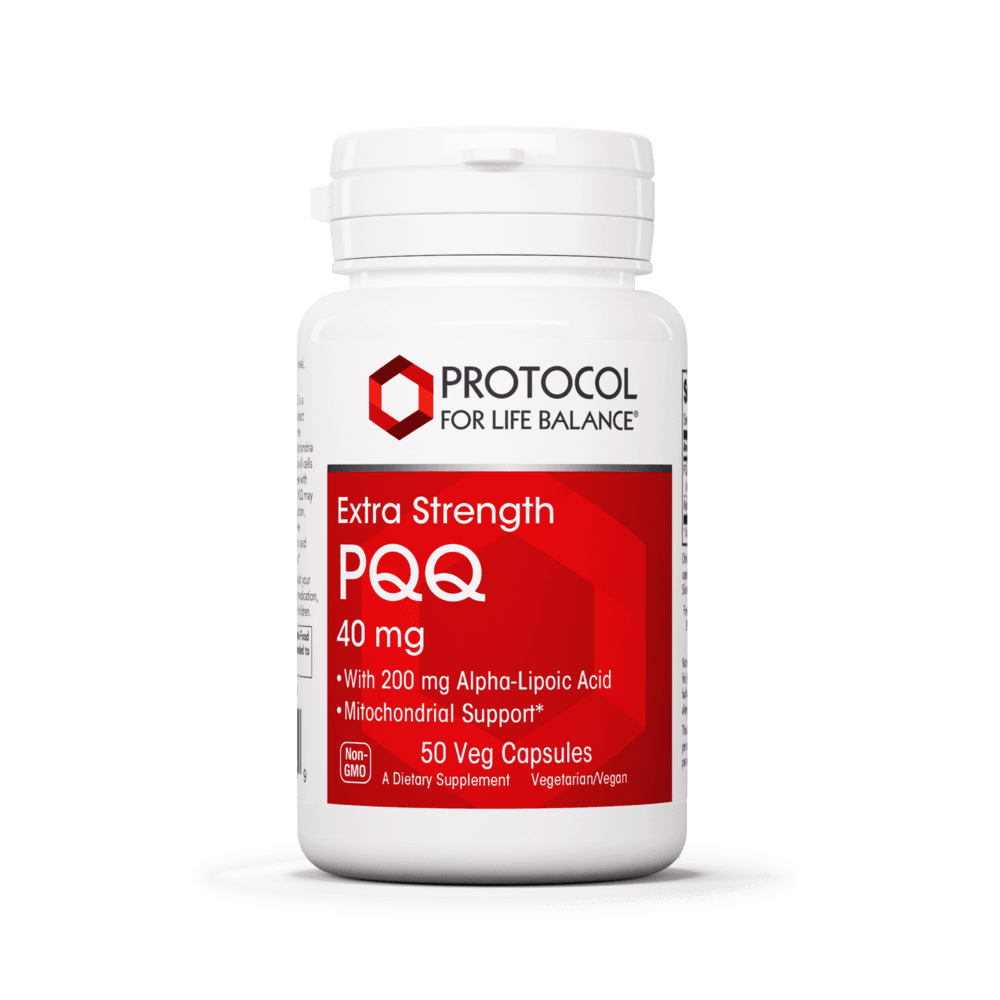
Extra Strength PQQ 40mg with Alpha-Lipoic Acid
Protocol for Life Balance · 1 capsule/day (40mg PQQ + 200mg ALA) with a meal
Log in or create an account, then take the 5-minute health assessment to see your price.
Log inNew here? Create an account✛ Why it's used
With 200 mg Alpha-Lipoic Acid
Mitochondrial Support*
Pyrroloquinoline quinone (PQQ) is a B vitamin-like compound that not only helps to protect mitochondria from free radicals, it also promotes the production of new mitochondria within cells.* Mitochondria are the parts of the cell that produce energy. While all cells have them, the heart and brain are especially dense with mitochondria due to their high energy demands.
PQQ may thus help to maintain robust cellular energy production, support heart health, and promote normal cognitive function.* Extra Strength PQQ includes alpha-lipoic acid to complement its free radical scavenging abilities.*
Suggested use
Take 1 capsule daily with a meal, or as directed by your healthcare practitioner.
Supplement facts
| PQQ (Pyrroloquinoline Quinone) (as PQQ disodium salt) | 40 mg |
|---|---|
| Alpha-Lipoic Acid | 200 mg |
Other ingredients: Rice Flour, Hypromellulose (cellulose capsule), Magnesium Stearate (vegetable source), and Silicon Dioxide. Not manufactured with wheat, gluten, soy, milk, egg, fish, shellfish or tree nut ingredients. Products in a GMP facility that processes other ingredients containing these allergens.
Dietary considerations · Gluten free · Dairy free · Soy free · Egg free · Tree nut free · Fish free · Wheat free · Crustacean Shellfish Free
Listed under Nutritional Supplements > Cellular Health > Mitochondrial Support
⚠ Key cautions
Cautions: ALA may cause mild GI upset or, rarely, skin rash; can lower blood glucose — monitor closely in anyone on glucose-lowering medication (insulin, sulfonylureas) due to hypoglycemia risk. ALA may also modestly reduce circulating thyroid hormone levels — monitor in those on thyroid hormone replacement. PQQ is generally well tolerated in short-term studies; long-term human safety data remains limited. Prescription interactions: glucose-lowering medications (hypoglycemia risk with ALA), thyroid hormone (ALA may reduce absorption/levels), chemotherapy (theoretical antioxidant-interference concern with ALA during active oncology treatment — review with care team). Priority: Moderate, primarily the ALA–glucose-lowering-medication interaction.